Vegogarden Banner
World's Best Modular Metal Raised Garden Beds
End of Season Clearance
Up to $400 Off
Plus free gifts with select purchases
Shop Now
See Offer Details
Even after the first frost and significant drop in temperatures, a greenhouse can give you weeks or even months of additional growing time by offering a more protected environment than an open garden. It shelters plants from wind, rain, and frost while capturing heat from the sun during the day.
Use the greenhouse for what it does best: protecting plants and extending the growing season, while choosing crops that match the conditions. Here are some recommendations on how to make the most of a greenhouse as winter arrives.
Extending the Growing Season Into Winter With a greenhouse , you can extend the growing season by creating a more sheltered environment than the outdoors. Even an unheated greenhouse can be useful. The structure can reduce exposure to wind and the elements while allowing sunlight to warm the interior during the day. How well the greenhouse extends your season will depend on:
In a region with mild climate, an unheated greenhouse may allow you to grow vegetables throughout most of winter. In a colder climate, it may be more useful for protecting cold-hardy crops and allowing some of your plants to stay productive into fall and earlier in spring.
What Can You Grow in a Greenhouse During Winter? The best crops to grow in a greenhouse are generally cool-season vegetables that handle low temperatures and reduced light. Some good options include:
Kale
Spinach
Lettuce
Arugula
Swiss chard
Radishes
Carrots
Parsley
Cilantro
You can also use the greenhouse to overwinter certain plants or start seedlings for the next growing season. The right crops will depend heavily on your local temperatures in winter.
Why Grow in a Winter Greenhouse? You might wonder why you need a greenhouse for vegetables that can already tolerate cold weather. Kale might be able to tolerate frost outdoors, but inside a greenhouse it will be protected from harsh wind, heavy rain, and extreme weather.
The greenhouse can also improve harvests and extend the period during which plants remain productive. For gardeners in marginal climates, that extra protection can make the difference between keeping a crop alive and losing it.
When Should You Move Plants Into a Greenhouse? Moving plants into a greenhouse before temperatures drop sharply gives them time to adjust to the new environment. For tender plants, the timing should be based on your local first-frost forecast and the temperature tolerance of each crop.
For cool-season crops, you can move them into a greenhouse earlier in fall and keep them growing well into winter. Monitor nighttime temperatures, upcoming weather, and the growth stage of your crops.
How to Prepare Your Greenhouse for Winter Before bringing plants inside, give the greenhouse a winter inspection. You should look over the frame, glazing, panels, fasteners, doors, and vents. Repair damaged panels and make sure doors close properly.
Remove dead plants, fallen leaves, weeds, and old growing material. Cleaning now reduces potential pest and disease problems later.
If you're using an irrigation system, inspect tubing, connectors, filters, and valves before freezing weather arrives. In climates where the system is at risk of freezing, drain components that aren't designed to withstand freezing temperatures.
How to Keep a Greenhouse Warm in Winter Temperature management becomes essential once the temperature drops significantly.
Capture Daytime Solar Heat A greenhouse naturally warms when sunlight enters and heats the interior surfaces. Keep glazing clean so as much available winter sunlight as possible can reach the plants.
Reduce Heat Loss Make sure doors and vents close properly when they're supposed to. Greenhouse-specific insulation or frost-protection products can also help reduce heat loss in colder conditions.
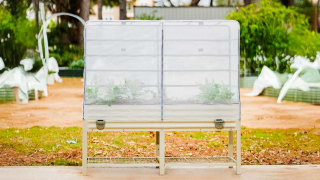
For example, Vego's Greenhouse Frost Cover System can provide additional protection for suitable greenhouse setups when temperatures drop.
Consider Supplemental Heat If you're trying to maintain temperatures above freezing or grow crops that require warmth, you may need supplemental heating. Use a heater specifically designed and rated for greenhouse use, and follow all safety instructions.
Does an Unheated Greenhouse Stay Above Freezing? This is one of the most important things to understand about winter greenhouse gardening. An unheated greenhouse can become significantly warmer than the outdoor air during a sunny winter day, but nighttime temperatures can still fall below freezing.
If your outdoor temperature drops to 20°F, for example, you shouldn't assume that an unheated greenhouse will remain above 32°F simply because it is enclosed. That's why winter greenhouse gardening works best when you combine cold-tolerant crops, weather monitoring, and a bit of frost protection.
How to Protect Greenhouse Plants From Frost If a hard freeze is on its way, it’s time to give your plants some extra protection.
Add Frost Covers A greenhouse frost cover can add insulation around plants or growing areas This can be especially useful during unusually cold nights.
Group Plants Together Grouping containers can reduce their exposure to cold air and make it easier to protect them. Just make sure plants still have adequate airflow to reduce humidity-related problems.
Protect the Roots Plants growing in containers have a relatively small volume of soil, which can cool and freeze more quickly than the ground.
Use appropriate insulation and protection around containers when temperatures are expected to drop sharply.
Monitor the Temperature A simple thermometer can tell you far more than guessing. Ideally, monitor both daytime and nighttime temperatures so you know what conditions your greenhouse is actually providing.
How Much Light Do Plants Need in a Winter Greenhouse? Daylight hours are shorter, and the sun sits lower in the sky. As a result, plants may receive considerably less light than they do during summer.
For many winter vegetables, that's perfectly normal. You aren't necessarily trying to achieve summer growth rates. However, if you're growing seedlings, herbs, or crops with higher light requirements, supplemental lighting may be useful.
A greenhouse can also be combined with an indoor growing setup. For example, you might keep cold-hardy vegetables growing inside the greenhouse while using grow lights indoors to start seedlings for spring.
Should You Water Plants Less in a Greenhouse? Plants generally grow more slowly in winter and lose less water than they do during hot summer weather. Cooler temperatures and higher humidity can also mean soil stays wet longer.
Overwatering can lead to poor root health and disease problems. Check the growing medium before watering rather than following a rigid summer schedule. The right balance is less frequent watering when conditions demand it, without letting plants experience prolonged drought stress.
Humidity and Ventilation A closed greenhouse can become surprisingly humid during winter. Cold temperatures combined with moisture can create conditions that encourage fungal and other disease problems.
On sunny days, the greenhouse may become much warmer than expected even when outdoor temperatures are low. Open vents or doors when appropriate to release excess heat and moisture, then close them before temperatures fall.
Using a Greenhouse to Get a Head Start in Spring One of the best uses for a greenhouse is getting seedlings started before outdoor conditions are ready. You can start crops under controlled conditions and gradually prepare them for transplanting once temperatures and soil conditions become suitable.
This can give you a head start on the growing season without requiring you to maintain warm-season crops through the winter season. For gardeners using grow lights, the greenhouse can be the transition from indoor seed starting to outdoor growing.
7 Tips for Getting More From Your Greenhouse This Winter 1. Grow the Right Crops Start with cold-hardy vegetables instead of trying to force summer crops through winter.
2. Plant Before Winter Arrives Plants need time to establish. Don't wait until the coldest weather arrives before planting your winter crops.
3. Monitor Nighttime Temperatures Daytime warmth can be misleading. Check what happens inside the greenhouse after sunset.
4. Keep the Greenhouse Clean Remove dead leaves and diseased plants promptly.
5. Don't Overwater Winter plants generally use less water than actively growing summer crops.
6. Ventilate When Necessary Control humidity and prevent excessive daytime temperatures.
FAQs Can a greenhouse extend the growing season into winter? Yes. A greenhouse can protect plants from wind, precipitation, and some frost while capturing solar heat during the day. How much it extends the season depends on your climate, greenhouse, crops, and whether supplemental heating is used.
Can you use an unheated greenhouse in winter? Yes. Unheated greenhouses can be useful for growing cold-hardy vegetables and protecting plants from winter weather. However, they can still reach freezing temperatures during cold nights.
What vegetables can you grow in a greenhouse during winter? Kale, spinach, lettuce, arugula, Swiss chard, mustard greens, Asian greens, radishes, carrots, beets, turnips, peas, and herbs are among the crops that can work well in winter, depending on your climate.
Does a greenhouse prevent frost? Not necessarily. A greenhouse can reduce exposure to frost and provide a warmer environment during the day, but an unheated greenhouse can still fall below freezing at night.
How do I keep my greenhouse warm without heating it? Maximize available sunlight, keep the structure in good condition, reduce unnecessary drafts, use appropriate insulation or frost covers, and consider thermal mass. These measures can moderate temperature swings but won't replace heating during severe cold.
Should I water greenhouse plants in winter? Yes, but usually less frequently than during summer. Check soil moisture before watering because plants often grow more slowly and use less water in winter.
Do plants need grow lights in a greenhouse during winter? Not always. Many cool-season crops can grow with natural winter light, although growth may be slow. Supplemental grow lights can be useful for seedlings, herbs, and crops that need more light.
When should I put plants in my greenhouse for winter? Move plants in before harsh cold weather arrives, giving them time to establish in the greenhouse. The exact timing depends on the crop, your local first frost, and the temperatures your greenhouse can maintain.
Is a greenhouse worth it for winter gardening? It can be, especially if you want to extend fall harvests, grow cold-hardy vegetables through winter, protect plants from harsh weather, or start spring crops early. The value depends on your climate and how much of the year you plan to use it.
Final Thoughts The biggest advantage of having a greenhouse in winter is creating a more protected growing environment. The extra layer between your plants and the weather can help you harvest later in fall, protect crops through winter, and get seedlings started earlier in spring.
Start with vegetables that tolerate cold. Keep an eye on nighttime temperatures, don't overwater, and have frost protection ready for hard freezes. With a little planning, your greenhouse can turn winter into another productive season in the garden.
Alfons C. from Vego Garden
Alfons is an experienced copywriting and marketing expert. He also managed creative campaigns for advertising agencies and renowned brands. He is a graduate of Goldsmiths College, University of London, and originally from Vancouver, Canada.
Get A 5% OFF + Free Shipping*
Be the first to know about our discounts, and get $15 off your next order of $199 + free shipping
Get Your Coupon
Please enable JavaScript to view the
comments powered by Disqus.
Alfons C. from Vego Garden
Alfons is an experienced copywriting and marketing expert. He also managed creative campaigns for advertising agencies and renowned brands. He is a graduate of Goldsmiths College, University of London, and originally from Vancouver, Canada.
Get A 5% OFF + Free Shipping*
Be the first to know about our discounts, and get $15 off your next order of $199 + free shipping
Get Your Coupon
{"39495389741091":{"discounted":true,"percent":true},"39495389773859":{"discounted":true,"percent":true},"39495389806627":{"discounted":true,"percent":true},"39495389839395":{"discounted":true,"percent":true},"39458935832611":{"discounted":true,"percent":true},"39458935767075":{"discounted":true,"percent":true},"39458935865379":{"discounted":true,"percent":true},"39458935799843":{"discounted":true,"percent":true},"39903465013283":{"discounted":true,"percent":true},"39903480250403":{"discounted":true,"percent":true},"39903467896867":{"discounted":true,"percent":true},"39903467962403":{"discounted":true,"percent":true},"39903467995171":{"discounted":true,"percent":true},"39903467929635":{"discounted":true,"percent":true},"39458936389667":{"discounted":true,"percent":true},"39458936324131":{"discounted":true,"percent":true},"39458936422435":{"discounted":true,"percent":true},"39458936356899":{"discounted":true,"percent":true},"33028107501603":{"discounted":true,"percent":true},"39279009136675":{"discounted":true,"percent":true},"39279009169443":{"discounted":true,"percent":true},"33028107534371":{"discounted":true,"percent":true},"40149904130083":{"discounted":true,"percent":true},"40157716578339":{"discounted":true,"percent":true},"40229600591907":{"discounted":true,"percent":true},"33028104650787":{"discounted":true,"percent":true},"39279430959139":{"discounted":true,"percent":true},"33028104683555":{"discounted":true,"percent":true},"39279430893603":{"discounted":true,"percent":true},"40149955215395":{"discounted":true,"percent":true},"40157728243747":{"discounted":true,"percent":true},"40231723794467":{"discounted":true,"percent":true},"39903477334051":{"discounted":true,"percent":true},"39302886096931":{"discounted":true,"percent":true},"39302886031395":{"discounted":true,"percent":true},"39302885998627":{"discounted":true,"percent":true},"39302886064163":{"discounted":true,"percent":true},"39457200799779":{"discounted":true,"percent":true},"39457200734243":{"discounted":true,"percent":true},"39457200832547":{"discounted":true,"percent":true},"39457200767011":{"discounted":true,"percent":true},"39903460065315":{"discounted":true,"percent":true},"33018842087459":{"discounted":true,"percent":true},"39279001403427":{"discounted":true,"percent":true},"33018842120227":{"discounted":true,"percent":true},"39278877605923":{"discounted":true,"percent":true},"40149905244195":{"discounted":true,"percent":true},"40157718347811":{"discounted":true,"percent":true},"39948202377251":{"discounted":true,"percent":true},"39948202410019":{"discounted":true,"percent":true},"39948202311715":{"discounted":true,"percent":true},"39948202344483":{"discounted":true,"percent":true},"39253770141731":{"discounted":true,"percent":true},"39253770174499":{"discounted":true,"percent":true},"39253770240035":{"discounted":true,"percent":true},"39253770207267":{"discounted":true,"percent":true},"39490596012067":{"discounted":true,"percent":true},"39490596044835":{"discounted":true,"percent":true},"39490595979299":{"discounted":true,"percent":true},"39490595946531":{"discounted":true,"percent":true},"40149985001507":{"discounted":true,"percent":true},"40157713072163":{"discounted":true,"percent":true},"33042263932963":{"discounted":true,"percent":true},"33042263965731":{"discounted":true,"percent":true},"39278875476003":{"discounted":true,"percent":true},"39279009792035":{"discounted":true,"percent":true},"40149988737059":{"discounted":true,"percent":true},"40157717430307":{"discounted":true,"percent":true},"40538642743331":{"discounted":true,"percent":true},"32893235068963":{"discounted":true,"percent":true},"39359510183971":{"discounted":true,"percent":true},"39359510380579":{"discounted":true,"percent":true},"39359509626915":{"discounted":true,"percent":true},"39302847758371":{"discounted":true,"percent":true},"33033504161827":{"discounted":true,"percent":true},"39302847266851":{"discounted":true,"percent":true},"39302847528995":{"discounted":true,"percent":true},"39458927509539":{"discounted":true,"percent":true},"39458927444003":{"discounted":true,"percent":true},"39458927542307":{"discounted":true,"percent":true},"39458927476771":{"discounted":true,"percent":true},"39457181958179":{"discounted":true,"percent":true},"39457181892643":{"discounted":true,"percent":true},"39457181990947":{"discounted":true,"percent":true},"39457181925411":{"discounted":true,"percent":true},"33042261409827":{"discounted":true,"percent":true},"33042261442595":{"discounted":true,"percent":true},"39279010742307":{"discounted":true,"percent":true},"39279010709539":{"discounted":true,"percent":true},"40149986869283":{"discounted":true,"percent":true},"40157715529763":{"discounted":true,"percent":true},"40538642415651":{"discounted":true,"percent":true},"33031990509603":{"discounted":true,"percent":true},"33031990542371":{"discounted":true,"percent":true},"39279016345635":{"discounted":true,"percent":true},"39279016476707":{"discounted":true,"percent":true},"40149997027363":{"discounted":true,"percent":true},"40157720936483":{"discounted":true,"percent":true},"39887154577443":{"discounted":true,"percent":true},"39593915875363":{"discounted":true,"percent":true},"39593915908131":{"discounted":true,"percent":true},"39593953296419":{"discounted":true,"percent":true},"39593953329187":{"discounted":true,"percent":true},"39612941565987":{"discounted":true,"percent":true},"39917388333091":{"discounted":true,"percent":true},"39917388365859":{"discounted":true,"percent":true},"39917390135331":{"discounted":true,"percent":true},"39917390168099":{"discounted":true,"percent":true},"39913389490211":{"discounted":true,"percent":true},"39917388398627":{"discounted":true,"percent":true},"39917388431395":{"discounted":true,"percent":true},"39917390200867":{"discounted":true,"percent":true},"40612116004899":{"discounted":true,"percent":true},"40612116037667":{"discounted":true,"percent":true},"39913593077795":{"discounted":true,"percent":true,"caCompareAtPrice":6895},"39913593110563":{"discounted":true,"percent":true,"caCompareAtPrice":11895},"39913593143331":{"discounted":true,"percent":true,"caCompareAtPrice":19595},"39917346193443":{"discounted":true,"percent":true,"caCompareAtPrice":31795},"39663128346659":{"discounted":true,"percent":true},"39663128379427":{"discounted":true,"percent":true},"39922332631075":{"discounted":true,"percent":true},"39922332663843":{"discounted":true,"percent":true},"39922340003875":{"discounted":true,"percent":true,"caCompareAtPrice":11095},"39922340036643":{"discounted":true,"percent":true},"39922340069411":{"discounted":true,"percent":true},"39705961496611":{"discounted":true,"percent":true,"caCompareAtPrice":4195},"39705961529379":{"discounted":true,"percent":true,"caCompareAtPrice":5595},"39705961562147":{"discounted":true,"percent":true,"caCompareAtPrice":8295},"39926582870051":{"discounted":true,"percent":true,"caCompareAtPrice":13794.999999999998},"39869961764899":{"discounted":true,"percent":true},"39869961797667":{"discounted":true,"percent":true},"39869961830435":{"discounted":true,"percent":true},"39936031031331":{"discounted":true,"percent":true},"39705945800739":{"discounted":true,"percent":true,"caCompareAtPrice":9695},"39705945767971":{"discounted":true,"percent":true,"caCompareAtPrice":6895},"39705945833507":{"discounted":true,"percent":true,"caCompareAtPrice":13794.999999999998},"39917346848803":{"discounted":true,"percent":true,"caCompareAtPrice":21995},"40006276382755":{"discounted":true,"percent":true},"40006276546595":{"discounted":true,"percent":true},"40006276775971":{"discounted":true,"percent":true},"40006276939811":{"discounted":true,"percent":true},"40024456036387":{"discounted":true,"percent":true},"40024461049891":{"discounted":true,"percent":true},"40021598797859":{"discounted":true,"percent":true},"40039271923747":{"discounted":true,"percent":true},"40039271956515":{"discounted":true,"percent":true},"40039271989283":{"discounted":true,"percent":true},"40039272022051":{"discounted":true,"percent":true},"40049744576547":{"discounted":true,"percent":true},"40049744609315":{"discounted":true,"percent":true},"40163199975459":{"discounted":true,"percent":true},"40163200008227":{"discounted":true,"percent":true},"40163199942691":{"discounted":true,"percent":true},"40201956589603":{"discounted":true,"percent":true},"40201956622371":{"discounted":true,"percent":true},"40195291480099":{"discounted":true,"percent":true},"40202236526627":{"discounted":true,"percent":true},"40202236559395":{"discounted":true,"percent":true},"40196235591715":{"discounted":true,"percent":true},"40202232037411":{"discounted":true,"percent":true},"40202232070179":{"discounted":true,"percent":true},"40195093495843":{"discounted":true,"percent":true},"40202231152675":{"discounted":true,"percent":true},"40202231185443":{"discounted":true,"percent":true},"40195095560227":{"discounted":true,"percent":true},"40202231447587":{"discounted":true,"percent":true},"40202231480355":{"discounted":true,"percent":true},"40195099328547":{"discounted":true,"percent":true},"40202229121059":{"discounted":true,"percent":true},"40195099688995":{"discounted":true,"percent":true},"40202233937955":{"discounted":true,"percent":true},"40195346268195":{"discounted":true,"percent":true},"40202236657699":{"discounted":true,"percent":true},"40202236690467":{"discounted":true,"percent":true},"40195281846307":{"discounted":true,"percent":true},"40202235969571":{"discounted":true,"percent":true},"40202236002339":{"discounted":true,"percent":true},"40682906943523":{"discounted":true,"percent":true},"40682907009059":{"discounted":true,"percent":true},"40682906976291":{"discounted":true,"percent":true},"40233730211875":{"discounted":true,"percent":true},"40233733259299":{"discounted":true,"percent":true},"40233729851427":{"discounted":true,"percent":true},"40233700491299":{"discounted":true,"percent":true},"40233701376035":{"discounted":true,"percent":true},"40233729753123":{"discounted":true,"percent":true},"40227788619811":{"discounted":true,"percent":true},"40233730801699":{"discounted":true,"percent":true},"40233696165923":{"discounted":true,"percent":true},"40233691807779":{"discounted":true,"percent":true},"40233733750819":{"discounted":true,"percent":true},"40233731817507":{"discounted":true,"percent":true},"40233730277411":{"discounted":true,"percent":true},"40233734209571":{"discounted":true,"percent":true},"40233730768931":{"discounted":true,"percent":true},"40233733685283":{"discounted":true,"percent":true},"40233733554211":{"discounted":true,"percent":true},"40233782771747":{"discounted":true,"percent":true},"40233733062691":{"discounted":true,"percent":true},"40233722839075":{"discounted":true,"percent":true},"40233732341795":{"discounted":true,"percent":true},"40233782804515":{"discounted":true,"percent":true},"40233745481763":{"discounted":true,"percent":true},"40233782706211":{"discounted":true,"percent":true},"40233776906275":{"discounted":true,"percent":true},"40233737584675":{"discounted":true,"percent":true},"40233779920931":{"discounted":true,"percent":true},"40233701146659":{"discounted":true,"percent":true},"40233730965539":{"discounted":true,"percent":true},"40233733914659":{"discounted":true,"percent":true},"40233698492451":{"discounted":true,"percent":true},"40233720774691":{"discounted":true,"percent":true},"40233698164771":{"discounted":true,"percent":true},"40233707372579":{"discounted":true,"percent":true},"40233730506787":{"discounted":true,"percent":true},"40186969849891":{"discounted":true,"percent":true,"caCompareAtPrice":6895},"40186969882659":{"discounted":true,"percent":true,"caCompareAtPrice":9695},"40186969915427":{"discounted":true,"percent":true,"caCompareAtPrice":12395},"40186969948195":{"discounted":true,"percent":true,"caCompareAtPrice":15194.999999999998},"39647044567075":{"discounted":true,"percent":true},"39647044599843":{"discounted":true,"percent":true},"40189384491043":{"discounted":true,"percent":true},"40189384523811":{"discounted":true,"percent":true},"40189384556579":{"discounted":true,"percent":true},"40189384589347":{"discounted":true,"percent":true},"40209225613347":{"discounted":true,"percent":true,"caCompareAtPrice":5595},"40251254702115":{"discounted":true,"percent":true},"40251276525603":{"discounted":true,"percent":true},"40251255128099":{"discounted":true,"percent":true},"40251276197923":{"discounted":true,"percent":true},"40251255160867":{"discounted":true,"percent":true},"40251276230691":{"discounted":true,"percent":true},"40251255193635":{"discounted":true,"percent":true},"40251276263459":{"discounted":true,"percent":true},"40246461792291":{"discounted":true,"percent":true},"40246461759523":{"discounted":true,"percent":true},"40327621640227":{"discounted":true,"percent":true},"40329419194403":{"discounted":true,"percent":true},"40329419227171":{"discounted":true,"percent":true},"40329419259939":{"discounted":true,"percent":true},"40327767064611":{"discounted":true,"percent":true},"40313739903011":{"discounted":true,"percent":true},"40313740165155":{"discounted":true,"percent":true},"40313740197923":{"discounted":true,"percent":true},"40313730367523":{"discounted":true,"percent":true},"40313730498595":{"discounted":true,"percent":true},"40313739411491":{"discounted":true,"percent":true},"40313739444259":{"discounted":true,"percent":true},"40328147238947":{"discounted":true,"percent":true},"40328129282083":{"discounted":true,"percent":true},"40328147075107":{"discounted":true,"percent":true},"40328146747427":{"discounted":true,"percent":true},"40376049893411":{"discounted":true,"percent":true},"40376049926179":{"discounted":true,"percent":true},"40376049958947":{"discounted":true,"percent":true},"40331197972515":{"discounted":true,"percent":true},"40376060149795":{"discounted":true,"percent":true},"40331071422499":{"discounted":true,"percent":true},"40092513566755":{"discounted":true,"percent":true},"40446144512035":{"discounted":true,"percent":true},"40446144544803":{"discounted":true,"percent":true},"40446144577571":{"discounted":true,"percent":true},"40446144610339":{"discounted":true,"percent":true},"40446144643107":{"discounted":true,"percent":true},"40446144675875":{"discounted":true,"percent":true},"40446145757219":{"discounted":true,"percent":true},"40446146412579":{"discounted":true,"percent":true},"40446145298467":{"discounted":true,"percent":true},"40453863473187":{"discounted":true,"percent":true},"40295020199971":{"discounted":true,"percent":true},"40454193971235":{"discounted":true,"percent":true},"40454190759971":{"discounted":true,"percent":true},"40481364148259":{"discounted":true,"percent":true},"40481363853347":{"discounted":true,"percent":true},"40481363755043":{"discounted":true,"percent":true},"40481362837539":{"discounted":true,"percent":true},"40481363623971":{"discounted":true,"percent":true},"40481363460131":{"discounted":true,"percent":true},"40481363132451":{"discounted":true,"percent":true},"40481363394595":{"discounted":true,"percent":true},"40481363066915":{"discounted":true,"percent":true},"40481362739235":{"discounted":true,"percent":true},"40481363230755":{"discounted":true,"percent":true},"40481363296291":{"discounted":true,"percent":true},"40481362935843":{"discounted":true,"percent":true},"40481362149411":{"discounted":true,"percent":true},"40481363787811":{"discounted":true,"percent":true},"40481363492899":{"discounted":true,"percent":true},"40481363427363":{"discounted":true,"percent":true},"40481363558435":{"discounted":true,"percent":true},"40481363165219":{"discounted":true,"percent":true},"40481363001379":{"discounted":true,"percent":true},"40481363099683":{"discounted":true,"percent":true},"40481363263523":{"discounted":true,"percent":true},"40481362673699":{"discounted":true,"percent":true},"40481362608163":{"discounted":true,"percent":true},"40481363034147":{"discounted":true,"percent":true},"40481362477091":{"discounted":true,"percent":true},"40481362542627":{"discounted":true,"percent":true},"40481362870307":{"discounted":true,"percent":true},"40481362575395":{"discounted":true,"percent":true},"40481362903075":{"discounted":true,"percent":true},"40481362378787":{"discounted":true,"percent":true},"40481362411555":{"discounted":true,"percent":true},"40481362772003":{"discounted":true,"percent":true},"40481362116643":{"discounted":true,"percent":true},"40481362804771":{"discounted":true,"percent":true},"40481363197987":{"discounted":true,"percent":true},"40481363361827":{"discounted":true,"percent":true},"40481362247715":{"discounted":true,"percent":true},"40481362346019":{"discounted":true,"percent":true},"40481362509859":{"discounted":true,"percent":true},"40481362083875":{"discounted":true,"percent":true},"40481362018339":{"discounted":true,"percent":true},"40481362051107":{"discounted":true,"percent":true},"40481362182179":{"discounted":true,"percent":true},"40481362280483":{"discounted":true,"percent":true},"40481361756195":{"discounted":true,"percent":true},"40481361985571":{"discounted":true,"percent":true},"40481361952803":{"discounted":true,"percent":true},"40481361920035":{"discounted":true,"percent":true},"40481361854499":{"discounted":true,"percent":true},"40481361821731":{"discounted":true,"percent":true},"40481361625123":{"discounted":true,"percent":true},"40481361887267":{"discounted":true,"percent":true},"40481361690659":{"discounted":true,"percent":true},"40481361723427":{"discounted":true,"percent":true},"40481361526819":{"discounted":true,"percent":true},"39567814754339":{"discounted":true,"percent":true},"39567814688803":{"discounted":true,"percent":true},"39567814623267":{"discounted":true,"percent":true},"39567814557731":{"discounted":true,"percent":true},"39567814721571":{"discounted":true,"percent":true},"39567814656035":{"discounted":true,"percent":true},"39567814590499":{"discounted":true,"percent":true},"39567814524963":{"discounted":true,"percent":true},"40186969653283":{"discounted":true,"percent":true},"40186969686051":{"discounted":true,"percent":true},"39567815409699":{"discounted":true,"percent":true},"40135922253859":{"discounted":true,"percent":true},"39567815475235":{"discounted":true,"percent":true},"39567815737379":{"discounted":true,"percent":true},"39567815573539":{"discounted":true,"percent":true},"39567815376931":{"discounted":true,"percent":true},"39567815540771":{"discounted":true,"percent":true},"39567815639075":{"discounted":true,"percent":true},"39567815606307":{"discounted":true,"percent":true},"39567815704611":{"discounted":true,"percent":true},"39567815508003":{"discounted":true,"percent":true},"39567815671843":{"discounted":true,"percent":true},"39567815442467":{"discounted":true,"percent":true},"39569217355811":{"discounted":true,"percent":true},"40313706414115":{"discounted":true,"percent":true},"40497627332643":{"discounted":true,"percent":true},"40313682395171":{"discounted":true,"percent":true},"40497627365411":{"discounted":true,"percent":true},"40313706381347":{"discounted":true,"percent":true},"40497627398179":{"discounted":true,"percent":true},"40561018994723":{"discounted":true,"percent":true},"40561019027491":{"discounted":true,"percent":true},"40561019060259":{"discounted":true,"percent":true},"40313682591779":{"discounted":true,"percent":true},"40497628184611":{"discounted":true,"percent":true},"40313682296867":{"discounted":true,"percent":true},"40497628217379":{"discounted":true,"percent":true},"40313682559011":{"discounted":true,"percent":true},"40497628250147":{"discounted":true,"percent":true},"40561019551779":{"discounted":true,"percent":true},"40561019584547":{"discounted":true,"percent":true},"40561019617315":{"discounted":true,"percent":true},"40503763370019":{"discounted":true,"percent":true},"40503763435555":{"discounted":true,"percent":true},"40503772610595":{"discounted":true,"percent":true},"40503766024227":{"discounted":true,"percent":true},"40837297242147":{"discounted":true,"percent":true},"40837297274915":{"discounted":true,"percent":true},"40837297307683":{"discounted":true,"percent":true},"40837297340451":{"discounted":true,"percent":true},"40837297373219":{"discounted":true,"percent":true},"40837297405987":{"discounted":true,"percent":true},"40503797743651":{"discounted":true,"percent":true},"40503800135715":{"discounted":true,"percent":true},"40516735467555":{"discounted":true,"percent":true},"40516658266147":{"discounted":true,"percent":true},"40516558389283":{"discounted":true,"percent":true},"40516773576739":{"discounted":true,"percent":true},"40837258412067":{"discounted":true,"percent":true},"40837258444835":{"discounted":true,"percent":true},"40837258477603":{"discounted":true,"percent":true},"40837258510371":{"discounted":true,"percent":true},"40837258543139":{"discounted":true,"percent":true},"40837258575907":{"discounted":true,"percent":true},"40837258608675":{"discounted":true,"percent":true},"40837258641443":{"discounted":true,"percent":true},"40837258674211":{"discounted":true,"percent":true},"40519099252771":{"discounted":true,"percent":true},"40528983392291":{"discounted":true,"percent":true},"40528983425059":{"discounted":true,"percent":true},"40528983457827":{"discounted":true,"percent":true},"40528983490595":{"discounted":true,"percent":true},"40528983523363":{"discounted":true,"percent":true},"40528983556131":{"discounted":true,"percent":true},"40528983588899":{"discounted":true,"percent":true},"40528983621667":{"discounted":true,"percent":true},"40528983654435":{"discounted":true,"percent":true},"39900463038499":{"discounted":true,"percent":true},"39900463005731":{"discounted":true,"percent":true},"40169091399715":{"discounted":true,"percent":true},"40169091596323":{"discounted":true,"percent":true},"40169091432483":{"discounted":true,"percent":true},"40169091465251":{"discounted":true,"percent":true},"40169091498019":{"discounted":true,"percent":true},"40169091530787":{"discounted":true,"percent":true},"40169091563555":{"discounted":true,"percent":true},"40134039535651":{"discounted":true,"percent":true},"40134039568419":{"discounted":true,"percent":true},"40134039601187":{"discounted":true,"percent":true},"40134039633955":{"discounted":true,"percent":true},"40134039666723":{"discounted":true,"percent":true},"40134039699491":{"discounted":true,"percent":true},"40134039732259":{"discounted":true,"percent":true},"40134039765027":{"discounted":true,"percent":true},"40134039797795":{"discounted":true,"percent":true},"40134039830563":{"discounted":true,"percent":true},"40134039863331":{"discounted":true,"percent":true},"40134039896099":{"discounted":true,"percent":true},"40134039928867":{"discounted":true,"percent":true},"40528971399203":{"discounted":true,"percent":true},"40468308459555":{"discounted":true,"percent":true},"40528971431971":{"discounted":true,"percent":true},"40528971464739":{"discounted":true,"percent":true},"40528971497507":{"discounted":true,"percent":true},"40528971530275":{"discounted":true,"percent":true},"40528971563043":{"discounted":true,"percent":true},"40528971595811":{"discounted":true,"percent":true},"40528971628579":{"discounted":true,"percent":true},"40549336219683":{"discounted":true,"percent":true},"40549336252451":{"discounted":true,"percent":true},"40549336285219":{"discounted":true,"percent":true},"40549336317987":{"discounted":true,"percent":true},"40549378818083":{"discounted":true,"percent":true},"40549378850851":{"discounted":true,"percent":true},"40549378883619":{"discounted":true,"percent":true},"40549372657699":{"discounted":true,"percent":true},"40549372690467":{"discounted":true,"percent":true},"40549372723235":{"discounted":true,"percent":true},"40443932246051":{"discounted":true,"percent":true},"40443932278819":{"discounted":true,"percent":true},"40443932311587":{"discounted":true,"percent":true},"40443932344355":{"discounted":true,"percent":true},"40443932377123":{"discounted":true,"percent":true},"40443932409891":{"discounted":true,"percent":true},"40443932442659":{"discounted":true,"percent":true},"40170791239715":{"discounted":true,"percent":true},"40411875770403":{"discounted":true,"percent":true},"40330991534115":{"discounted":true,"percent":true},"40558101069859":{"discounted":true,"percent":true},"40558101102627":{"discounted":true,"percent":true},"40558092910627":{"discounted":true,"percent":true},"40558092943395":{"discounted":true,"percent":true},"40558403813411":{"discounted":true,"percent":true},"40557999259683":{"discounted":true,"percent":true},"40557999292451":{"discounted":true,"percent":true},"40558401028131":{"discounted":true,"percent":true},"40558003453987":{"discounted":true,"percent":true},"40558003486755":{"discounted":true,"percent":true},"40558000570403":{"discounted":true,"percent":true},"40558000603171":{"discounted":true,"percent":true},"40558401585187":{"discounted":true,"percent":true},"40558002896931":{"discounted":true,"percent":true},"40558002929699":{"discounted":true,"percent":true},"40558402306083":{"discounted":true,"percent":true},"40561551474723":{"discounted":true,"percent":true},"40561551507491":{"discounted":true,"percent":true},"40561551540259":{"discounted":true,"percent":true},"40561551573027":{"discounted":true,"percent":true},"40561551605795":{"discounted":true,"percent":true},"40561551638563":{"discounted":true,"percent":true},"40561553047587":{"discounted":true,"percent":true},"40561553080355":{"discounted":true,"percent":true},"40561553113123":{"discounted":true,"percent":true},"40561553145891":{"discounted":true,"percent":true},"40561553178659":{"discounted":true,"percent":true},"40561553211427":{"discounted":true,"percent":true},"40561568907299":{"discounted":true,"percent":true},"40561568940067":{"discounted":true,"percent":true},"40561568972835":{"discounted":true,"percent":true},"40561569005603":{"discounted":true,"percent":true},"40561569038371":{"discounted":true,"percent":true},"40561569071139":{"discounted":true,"percent":true},"40563230277667":{"discounted":true,"percent":true},"40563230310435":{"discounted":true,"percent":true},"40565181120547":{"discounted":true,"percent":true},"40565181153315":{"discounted":true,"percent":true},"40565181186083":{"discounted":true,"percent":true},"40565200617507":{"discounted":true,"percent":true},"40565200650275":{"discounted":true,"percent":true},"40565200683043":{"discounted":true,"percent":true},"40565234008099":{"discounted":true,"percent":true},"40565234040867":{"discounted":true,"percent":true},"40565234073635":{"discounted":true,"percent":true},"40565244035107":{"discounted":true,"percent":true},"40565244067875":{"discounted":true,"percent":true},"40565244100643":{"discounted":true,"percent":true},"40575683362851":{"discounted":true,"percent":true},"40579370188835":{"discounted":true},"40575663898659":{"discounted":true,"percent":true},"40579374415907":{"discounted":true,"percent":true},"40769353809955":{"discounted":true,"percent":true},"40582727073827":{"discounted":true,"percent":true},"40582727106595":{"discounted":true,"percent":true},"40769354760227":{"discounted":true,"percent":true},"40585940041763":{"discounted":true,"percent":true},"40585940074531":{"discounted":true,"percent":true},"40770454126627":{"discounted":true,"percent":true},"40770454159395":{"discounted":true,"percent":true},"40837276827683":{"discounted":true,"percent":true},"40837276860451":{"discounted":true,"percent":true},"40837276893219":{"discounted":true,"percent":true},"40837276925987":{"discounted":true,"percent":true},"40837276958755":{"discounted":true,"percent":true},"40837276991523":{"discounted":true,"percent":true},"40837277024291":{"discounted":true,"percent":true},"40837277057059":{"discounted":true,"percent":true},"40837277089827":{"discounted":true,"percent":true},"40600751374371":{"discounted":true,"percent":true},"40600751407139":{"discounted":true,"percent":true},"40577987444771":{"discounted":true,"percent":true},"40577987412003":{"discounted":true,"percent":true},"40577987346467":{"discounted":true,"percent":true},"40577987510307":{"discounted":true,"percent":true},"40577987379235":{"discounted":true,"percent":true},"40577987477539":{"discounted":true,"percent":true},"40575684771875":{"discounted":true,"percent":true},"40575684083747":{"discounted":true},"40575684116515":{"discounted":true},"40575686115363":{"discounted":true,"percent":true},"40575684902947":{"discounted":true,"percent":true},"40575684968483":{"discounted":true,"percent":true},"40624748527651":{"discounted":true,"percent":true},"40624748560419":{"discounted":true,"percent":true},"40623599976483":{"discounted":true,"percent":true},"40623600009251":{"discounted":true,"percent":true},"40623600042019":{"discounted":true,"percent":true},"40623600074787":{"discounted":true,"percent":true},"40603450048547":{"discounted":true,"percent":true},"40603450081315":{"discounted":true,"percent":true},"40603450114083":{"discounted":true,"percent":true},"40632770887715":{"discounted":true},"40632770920483":{"discounted":true},"40632770953251":{"discounted":true},"40632776785955":{"discounted":true},"40632776851491":{"discounted":true},"40632776917027":{"discounted":true},"41890808201251":{"discounted":true},"41890808234019":{"discounted":true},"41890808266787":{"discounted":true},"40674028159011":{"discounted":true},"40674028191779":{"discounted":true},"40674588459043":{"discounted":true},"40674588491811":{"discounted":true},"40674028814371":{"discounted":true},"40674028847139":{"discounted":true},"40674588819491":{"discounted":true},"40674588852259":{"discounted":true},"40674511257635":{"discounted":true},"40674511290403":{"discounted":true},"40674511323171":{"discounted":true},"40674511355939":{"discounted":true},"40674512240675":{"discounted":true},"40674512273443":{"discounted":true},"40674512306211":{"discounted":true},"40674512338979":{"discounted":true},"40482229747747":{"discounted":true},"40696809914403":{"discounted":true},"40700910632995":{"discounted":true},"40700910665763":{"discounted":true},"40700910698531":{"discounted":true},"40700910731299":{"discounted":true},"40700910764067":{"discounted":true},"40700910796835":{"discounted":true},"40700901687331":{"discounted":true},"40700901720099":{"discounted":true},"40707472588835":{"discounted":true},"40707472982051":{"discounted":true},"40706641362979":{"discounted":true},"40721328013347":{"discounted":true},"40713409396771":{"discounted":true},"40713409429539":{"discounted":true},"40724032421923":{"discounted":true},"40724032454691":{"discounted":true},"40724032487459":{"discounted":true},"40724020068387":{"discounted":true},"40724020101155":{"discounted":true},"40734272094243":{"discounted":true},"40734272127011":{"discounted":true},"40734272258083":{"discounted":true},"40734272323619":{"discounted":true},"40734272389155":{"discounted":true},"40740311695395":{"discounted":true},"40740311728163":{"discounted":true},"40740035330083":{"discounted":true},"40740035362851":{"discounted":true},"40740035395619":{"discounted":true},"40740022124579":{"discounted":true,"percent":true},"40740022157347":{"discounted":true,"percent":true},"40740022190115":{"discounted":true,"percent":true},"40740022222883":{"discounted":true,"percent":true},"40740022255651":{"discounted":true,"percent":true},"40740022288419":{"discounted":true,"percent":true},"40740016554019":{"discounted":true},"40740007182371":{"discounted":true},"40740007215139":{"discounted":true},"40740007247907":{"discounted":true},"40740007280675":{"discounted":true},"40739982180387":{"discounted":true,"percent":true},"40739982213155":{"discounted":true,"percent":true},"40739982245923":{"discounted":true,"percent":true},"40739982311459":{"discounted":true,"percent":true},"40739974414371":{"discounted":true},"40744601878563":{"discounted":true},"40744601911331":{"discounted":true},"40744601944099":{"discounted":true},"40739965370403":{"discounted":true},"40739943874595":{"discounted":true},"40739943907363":{"discounted":true},"40739912220707":{"discounted":true},"40739912253475":{"discounted":true},"40739912286243":{"discounted":true},"40739912319011":{"discounted":true},"40739912351779":{"discounted":true},"40739912384547":{"discounted":true},"40739912417315":{"discounted":true},"40739888529443":{"discounted":true},"40738045657123":{"discounted":true},"40738045689891":{"discounted":true,"caCompareAtPrice":56195.00000000001},"40738045722659":{"discounted":true},"40746867654691":{"discounted":true},"40746867687459":{"discounted":true},"40746867720227":{"discounted":true},"40746867752995":{"discounted":true},"40749252378659":{"discounted":true},"40749308543011":{"discounted":true},"40749726498851":{"discounted":true},"40749727154211":{"discounted":true},"40749728301091":{"discounted":true},"40752536944675":{"discounted":true},"40752536977443":{"discounted":true},"40752537075747":{"discounted":true},"40752537010211":{"discounted":true},"40752554475555":{"discounted":true},"40752537042979":{"discounted":true},"40752526884899":{"discounted":true},"40752526917667":{"discounted":true},"40753362370595":{"discounted":true},"40753362403363":{"discounted":true},"40753362436131":{"discounted":true},"40753362468899":{"discounted":true},"40761031950371":{"discounted":true},"40760981389347":{"discounted":true},"40731163394083":{"discounted":true},"40751841050659":{"discounted":true},"40766173249571":{"discounted":true},"40767208226851":{"discounted":true},"40767208259619":{"discounted":true},"40767208292387":{"discounted":true},"40760982765603":{"discounted":true},"40771181772835":{"discounted":true},"40771256057891":{"discounted":true},"40837297668131":{"discounted":true},"40837297700899":{"discounted":true},"40837297733667":{"discounted":true},"40837297766435":{"discounted":true},"40775268040739":{"discounted":true},"40775799767075":{"discounted":true},"40775879950371":{"discounted":true},"40771053223971":{"discounted":true},"40782894923811":{"discounted":true},"40782903279651":{"discounted":true},"40782908489763":{"discounted":true},"40782912651299":{"discounted":true},"40782913241123":{"discounted":true},"40782914027555":{"discounted":true},"40782914682915":{"discounted":true},"40782915600419":{"discounted":true},"40782915764259":{"discounted":true},"40783640985635":{"discounted":true},"40181956116515":{"discounted":true},"40794599358499":{"discounted":true},"40801300414499":{"discounted":true},"40801300447267":{"discounted":true},"40801300480035":{"discounted":true},"40804272046115":{"discounted":true},"40804272078883":{"discounted":true},"40804272111651":{"discounted":true},"40804272275491":{"discounted":true},"40804272308259":{"discounted":true},"40804272341027":{"discounted":true},"40804272472099":{"discounted":true},"40804272504867":{"discounted":true},"40804272537635":{"discounted":true},"40804269981731":{"discounted":true},"40804271489059":{"discounted":true},"40804385685539":{"discounted":true},"40804385718307":{"discounted":true},"40804385751075":{"discounted":true},"40805784748067":{"discounted":true},"40805784780835":{"discounted":true},"40805784682531":{"discounted":true},"40805784715299":{"discounted":true},"40804266082339":{"discounted":true},"40804266115107":{"discounted":true},"40804266147875":{"discounted":true},"40804266180643":{"discounted":true},"40805366431779":{"discounted":true},"40805281136675":{"discounted":true},"40809607790627":{"discounted":true,"percent":true},"40809607823395":{"discounted":true,"percent":true},"40809607856163":{"discounted":true,"percent":true},"40809614409763":{"discounted":true,"percent":true},"40809614442531":{"discounted":true,"percent":true},"40809614475299":{"discounted":true,"percent":true},"40809617293347":{"discounted":true,"percent":true},"40809617326115":{"discounted":true,"percent":true},"40809617358883":{"discounted":true,"percent":true},"40809617817635":{"discounted":true,"percent":true},"40809617850403":{"discounted":true,"percent":true},"40809617883171":{"discounted":true,"percent":true},"40809675751459":{"discounted":true,"percent":true},"40809675784227":{"discounted":true,"percent":true},"40809675816995":{"discounted":true,"percent":true},"40809675620387":{"discounted":true,"percent":true},"40809675653155":{"discounted":true,"percent":true},"40809675685923":{"discounted":true,"percent":true},"40809674932259":{"discounted":true,"percent":true},"40809674965027":{"discounted":true,"percent":true},"40809674997795":{"discounted":true,"percent":true},"40809674833955":{"discounted":true,"percent":true},"40809674866723":{"discounted":true,"percent":true},"40809674899491":{"discounted":true,"percent":true},"40727616716835":{"discounted":true},"40727616749603":{"discounted":true},"40782413103139":{"discounted":true},"40782413135907":{"discounted":true},"40806981992483":{"discounted":true},"40806982025251":{"discounted":true},"40782455570467":{"discounted":true},"40782455603235":{"discounted":true},"40782463303715":{"discounted":true},"40782463336483":{"discounted":true},"40806983073827":{"discounted":true},"40806983106595":{"discounted":true},"40747673255971":{"discounted":true},"40747673288739":{"discounted":true},"40806983237667":{"discounted":true},"40806983270435":{"discounted":true},"40806984351779":{"discounted":true},"40806984384547":{"discounted":true},"40806984744995":{"discounted":true},"40806984777763":{"discounted":true},"40510812749859":{"discounted":true},"40510812782627":{"discounted":true},"40510812815395":{"discounted":true},"40785685217315":{"discounted":true},"40785685250083":{"discounted":true},"40510811668515":{"discounted":true},"40510811701283":{"discounted":true},"40510811734051":{"discounted":true},"40510811766819":{"discounted":true},"40748790054947":{"discounted":true},"40748790087715":{"discounted":true},"40806985826339":{"discounted":true},"40806985859107":{"discounted":true},"40733104209955":{"discounted":true},"40510808129571":{"discounted":true},"40510808588323":{"discounted":true},"40510809014307":{"discounted":true},"40785685413923":{"discounted":true},"40785685446691":{"discounted":true},"40481363591203":{"discounted":true},"40481363656739":{"discounted":true},"40481363689507":{"discounted":true},"40785741676579":{"discounted":true},"40785741709347":{"discounted":true},"40801550794787":{"discounted":true},"40806987071523":{"discounted":true},"40806987104291":{"discounted":true},"40785889820707":{"discounted":true},"40785889853475":{"discounted":true},"40727440883747":{"discounted":true},"40727440916515":{"discounted":true},"40806988021795":{"discounted":true},"40806988054563":{"discounted":true},"40785923244067":{"discounted":true},"40785923276835":{"discounted":true},"40806988972067":{"discounted":true},"40806989004835":{"discounted":true},"40786193481763":{"discounted":true},"40786193514531":{"discounted":true},"40750153334819":{"discounted":true},"40786238898211":{"discounted":true},"40786238930979":{"discounted":true},"40805535350819":{"discounted":true},"40805535383587":{"discounted":true},"40786246369315":{"discounted":true},"40786246402083":{"discounted":true},"40786247548963":{"discounted":true},"40786247581731":{"discounted":true},"40786248695843":{"discounted":true},"40786248728611":{"discounted":true},"40807051198499":{"discounted":true},"40807051231267":{"discounted":true},"40775664205859":{"discounted":true},"40775664238627":{"discounted":true},"40775664271395":{"discounted":true},"40775664304163":{"discounted":true},"40775664336931":{"discounted":true},"40775664369699":{"discounted":true},"40775664402467":{"discounted":true},"40775664435235":{"discounted":true},"40775664468003":{"discounted":true},"40775664500771":{"discounted":true},"40775664533539":{"discounted":true},"40775664566307":{"discounted":true},"40775664599075":{"discounted":true},"40775664631843":{"discounted":true},"40775664664611":{"discounted":true},"40775664697379":{"discounted":true},"40733132652579":{"discounted":true},"40727608393763":{"discounted":true},"40805549375523":{"discounted":true},"40805549408291":{"discounted":true},"40807052017699":{"discounted":true},"40807052050467":{"discounted":true},"40727616520227":{"discounted":true},"40727616552995":{"discounted":true},"40510808686627":{"discounted":true},"40510809210915":{"discounted":true},"40510813175843":{"discounted":true},"40510813208611":{"discounted":true},"40510813241379":{"discounted":true},"40510813274147":{"discounted":true},"40510813306915":{"discounted":true},"40510813339683":{"discounted":true},"40510813372451":{"discounted":true},"40510813405219":{"discounted":true},"40510813437987":{"discounted":true},"40764371370019":{"discounted":true},"40785983406115":{"discounted":true},"40785983438883":{"discounted":true},"40510809374755":{"discounted":true},"40510809735203":{"discounted":true},"40510809964579":{"discounted":true},"40510810226723":{"discounted":true},"40510807867427":{"discounted":true},"40510808457251":{"discounted":true},"40727617273891":{"discounted":true},"40727617306659":{"discounted":true},"40727617339427":{"discounted":true},"40805636014115":{"discounted":true},"40510808326179":{"discounted":true},"40785687740451":{"discounted":true},"40785687773219":{"discounted":true},"40774221103139":{"discounted":true},"40750144618531":{"discounted":true},"40750144651299":{"discounted":true},"40750144684067":{"discounted":true},"40750144716835":{"discounted":true},"40510809178147":{"discounted":true},"40510809669667":{"discounted":true},"40510809833507":{"discounted":true},"40510810128419":{"discounted":true},"40811218075683":{"discounted":true},"40818757468195":{"discounted":true},"40834391867427":{"discounted":true},"40834391900195":{"discounted":true},"40832499515427":{"discounted":true},"40832499548195":{"discounted":true},"40832499580963":{"discounted":true},"40832517734435":{"discounted":true},"40832517767203":{"discounted":true},"40832517799971":{"discounted":true},"40832545554467":{"discounted":true},"40832545587235":{"discounted":true},"40832545620003":{"discounted":true},"40832782434339":{"discounted":true},"40832782467107":{"discounted":true},"40832782499875":{"discounted":true},"40832787873827":{"discounted":true},"40832787906595":{"discounted":true},"40832787939363":{"discounted":true},"40832801210403":{"discounted":true},"40832801243171":{"discounted":true},"40832801275939":{"discounted":true},"40848002023459":{"discounted":true},"40848002056227":{"discounted":true},"40847383822371":{"discounted":true},"40849051156515":{"discounted":true},"40849064984611":{"discounted":true},"40849065017379":{"discounted":true},"40849065050147":{"discounted":true},"40849066852387":{"discounted":true},"40849066885155":{"discounted":true},"40849066917923":{"discounted":true},"40853418541091":{"discounted":true},"40853418573859":{"discounted":true},"40853418606627":{"discounted":true},"40853673017379":{"discounted":true},"40854375530531":{"discounted":true},"40859672281123":{"discounted":true},"40859672313891":{"discounted":true},"40860257419299":{"discounted":true},"40860257452067":{"discounted":true},"40860254765091":{"discounted":true},"40860254797859":{"discounted":true},"40862897078307":{"discounted":true},"40863823626275":{"discounted":true},"40863823659043":{"discounted":true},"40865115275299":{"discounted":true},"40865115308067":{"discounted":true},"40850585387043":{"discounted":true},"40867956752419":{"discounted":true},"40863858851875":{"discounted":true},"40863857639459":{"discounted":true},"40865111932963":{"discounted":true},"40865112358947":{"discounted":true},"40865140834339":{"discounted":true},"40865931722787":{"discounted":true},"40865931755555":{"discounted":true},"40865931788323":{"discounted":true},"40866886844451":{"discounted":true},"40866886877219":{"discounted":true},"40870729089059":{"discounted":true},"40870729121827":{"discounted":true},"40870729154595":{"discounted":true},"40870729449507":{"discounted":true},"40870729482275":{"discounted":true},"40870729515043":{"discounted":true},"40870734954531":{"discounted":true},"40870735347747":{"discounted":true},"40870736691235":{"discounted":true},"40870737543203":{"discounted":true},"40870737870883":{"discounted":true},"40870738591779":{"discounted":true},"40202231873571":{"discounted":true},"40195260317731":{"discounted":true},"40202231906339":{"discounted":true},"40202233151523":{"discounted":true},"40195100639267":{"discounted":true},"40202233184291":{"discounted":true},"40481362640931":{"discounted":true},"40774788612131":{"discounted":true},"40774788644899":{"discounted":true},"40774788677667":{"discounted":true},"40879068971043":{"discounted":true},"40879209644067":{"discounted":true},"40879209676835":{"discounted":true},"40879209709603":{"discounted":true},"40879209742371":{"discounted":true},"40879211020323":{"discounted":true},"40879211053091":{"discounted":true},"40879211085859":{"discounted":true},"40879211118627":{"discounted":true},"40879766241315":{"discounted":true},"40879788982307":{"discounted":true},"40879793504291":{"discounted":true},"40879874572323":{"discounted":true},"40879876374563":{"discounted":true},"40879873392675":{"discounted":true},"40879873720355":{"discounted":true},"40879873982499":{"discounted":true},"40879876767779":{"discounted":true},"40373521416227":{"discounted":true},"39287961583651":{"discounted":true},"39760105111587":{"discounted":true},"39509890990115":{"discounted":true},"39509891022883":{"discounted":true},"40373521383459":{"discounted":true},"39287961550883":{"discounted":true},"39760104685603":{"discounted":true},"39509890826275":{"discounted":true},"39509890859043":{"discounted":true},"40373521448995":{"discounted":true},"39287961616419":{"discounted":true},"39760105439267":{"discounted":true},"39509891153955":{"discounted":true},"39509891186723":{"discounted":true},"40373521481763":{"discounted":true},"39287961649187":{"discounted":true},"39760105570339":{"discounted":true},"39509891317795":{"discounted":true},"39509891350563":{"discounted":true},"32893193289763":{"discounted":true},"33033675964451":{"discounted":true},"32893193322531":{"discounted":true},"33033675669539":{"discounted":true},"39266081439779":{"discounted":true},"32893193355299":{"discounted":true},"40461105692707":{"discounted":true},"39904164216867":{"discounted":true},"39904164511779":{"discounted":true},"39904164249635":{"discounted":true},"39904164282403":{"discounted":true},"40461105725475":{"discounted":true},"39904164085795":{"discounted":true},"39904164118563":{"discounted":true},"39904164151331":{"discounted":true},"39904164184099":{"discounted":true},"40461105823779":{"discounted":true},"39904164315171":{"discounted":true},"39904164544547":{"discounted":true},"39904164347939":{"discounted":true},"39904164380707":{"discounted":true},"40461105758243":{"discounted":true},"39904164413475":{"discounted":true},"39904164577315":{"discounted":true},"39904164446243":{"discounted":true},"39904164479011":{"discounted":true},"40880697049123":{"discounted":true},"39904158023715":{"discounted":true},"39904158318627":{"discounted":true},"39904158056483":{"discounted":true},"39904158089251":{"discounted":true},"40880697081891":{"discounted":true},"39904157892643":{"discounted":true},"39904157925411":{"discounted":true},"39904157958179":{"discounted":true},"39904157990947":{"discounted":true},"40880697114659":{"discounted":true},"39904158122019":{"discounted":true},"39904158351395":{"discounted":true},"39904158154787":{"discounted":true},"39904158187555":{"discounted":true},"40880697147427":{"discounted":true},"39904158220323":{"discounted":true},"39904158384163":{"discounted":true},"39904158253091":{"discounted":true},"39904158285859":{"discounted":true},"40865124581411":{"discounted":true},"40879076016163":{"discounted":true},"40879076048931":{"discounted":true},"40879076081699":{"discounted":true},"40879076114467":{"discounted":true},"40897879343139":{"discounted":true},"40897879375907":{"discounted":true},"40898729115683":{"discounted":true},"40898729148451":{"discounted":true},"40898727837731":{"discounted":true},"40898727870499":{"discounted":true},"40898727903267":{"discounted":true},"40898727936035":{"discounted":true},"40898727116835":{"discounted":true},"40898727149603":{"discounted":true},"40898727182371":{"discounted":true},"40898727215139":{"discounted":true},"40898727247907":{"discounted":true},"40898727280675":{"discounted":true},"40898727313443":{"discounted":true},"40898726854691":{"discounted":true},"40898726887459":{"discounted":true},"40898726363171":{"discounted":true},"40898723512355":{"discounted":true},"40898723545123":{"discounted":true},"40898681372707":{"discounted":true},"40898681405475":{"discounted":true},"40898681438243":{"discounted":true},"40898662105123":{"discounted":true},"40898662137891":{"discounted":true},"40898662170659":{"discounted":true},"40898662203427":{"discounted":true},"40898662236195":{"discounted":true},"40898662268963":{"discounted":true},"40682773577763":{"discounted":true},"40682773544995":{"discounted":true},"40904223522851":{"discounted":true},"40901545459747":{"discounted":true},"40904340144163":{"discounted":true},"40904340176931":{"discounted":true},"40904340209699":{"discounted":true},"40904349057059":{"discounted":true},"40904349089827":{"discounted":true},"40904349122595":{"discounted":true},"40904349155363":{"discounted":true},"40898659647523":{"discounted":true},"40898660499491":{"discounted":true},"40898660925475":{"discounted":true,"auCompareAtPrice":7995},"40898661449763":{"discounted":true},"40916461486115":{"discounted":true},"40926622023715":{"discounted":true},"40926622089251":{"discounted":true},"40926622122019":{"discounted":true},"40926622416931":{"discounted":true},"40926622515235":{"discounted":true},"40926622679075":{"discounted":true},"40926624120867":{"discounted":true},"40926624153635":{"discounted":true},"40926624219171":{"discounted":true},"40926702108707":{"discounted":true},"40926702305315":{"discounted":true},"40926702665763":{"discounted":true},"40926702895139":{"discounted":true},"40926703091747":{"discounted":true},"40926703222819":{"discounted":true},"40926703386659":{"discounted":true},"40926703747107":{"discounted":true},"40926704009251":{"discounted":true},"40926704238627":{"discounted":true},"40926252138531":{"discounted":true},"40926665703459":{"discounted":true},"40926769119267":{"discounted":true},"40926769414179":{"discounted":true},"40926769446947":{"discounted":true},"40926779211811":{"discounted":true},"40926783111203":{"discounted":true},"40926783176739":{"discounted":true},"40926783373347":{"discounted":true},"40926783340579":{"discounted":true},"40926622711843":{"discounted":true},"40926783242275":{"discounted":true},"40926703255587":{"discounted":true},"40926768955427":{"discounted":true},"40928538656803":{"discounted":true},"40928538689571":{"discounted":true},"40928538722339":{"discounted":true},"40928538755107":{"discounted":true},"40928538787875":{"discounted":true},"40928538820643":{"discounted":true},"40928538853411":{"discounted":true},"40928538886179":{"discounted":true},"40928538918947":{"discounted":true},"40928538951715":{"discounted":true},"40928538984483":{"discounted":true},"40928539017251":{"discounted":true},"40926771380259":{"discounted":true},"40928052183075":{"discounted":true},"40928052215843":{"discounted":true},"40926771445795":{"discounted":true},"40928052248611":{"discounted":true},"40928052281379":{"discounted":true},"40926771511331":{"discounted":true},"40928052314147":{"discounted":true},"40928052346915":{"discounted":true},"40926771576867":{"discounted":true},"40928052379683":{"discounted":true},"40928052412451":{"discounted":true},"40926771642403":{"discounted":true},"40928052445219":{"discounted":true},"40928052477987":{"discounted":true},"40926771707939":{"discounted":true},"40928052510755":{"discounted":true},"40928052543523":{"discounted":true},"40926771773475":{"discounted":true},"40928052576291":{"discounted":true},"40928052609059":{"discounted":true},"40928544325667":{"discounted":true,"percent":true},"40928544358435":{"discounted":true,"percent":true},"40928544391203":{"discounted":true,"percent":true},"40928544423971":{"discounted":true,"percent":true},"40928544456739":{"discounted":true,"percent":true},"40928544489507":{"discounted":true,"percent":true},"40928544522275":{"discounted":true,"percent":true},"40928544555043":{"discounted":true,"percent":true},"40928544587811":{"discounted":true,"percent":true},"40928544718883":{"discounted":true},"40928544751651":{"discounted":true},"40928544784419":{"discounted":true},"40928544817187":{"discounted":true},"40928544849955":{"discounted":true},"40928544882723":{"discounted":true},"40928544915491":{"discounted":true},"40928544948259":{"discounted":true},"40928544981027":{"discounted":true},"40928545013795":{"discounted":true},"40928545046563":{"discounted":true},"40928545079331":{"discounted":true},"40928545112099":{"discounted":true},"40928545144867":{"discounted":true},"40928545177635":{"discounted":true},"40928545210403":{"discounted":true},"40928545243171":{"discounted":true},"40928545275939":{"discounted":true},"40928545308707":{"discounted":true},"40928545341475":{"discounted":true},"40928545374243":{"discounted":true},"40928514179107":{"discounted":true},"40928514113571":{"discounted":true},"40928514146339":{"discounted":true},"40931171434531":{"discounted":true},"40931171467299":{"discounted":true},"40929907048483":{"discounted":true},"40929907081251":{"discounted":true},"40929907114019":{"discounted":true},"40929907146787":{"discounted":true},"40929907179555":{"discounted":true},"40929907212323":{"discounted":true},"40929907245091":{"discounted":true},"40929907277859":{"discounted":true},"40929907310627":{"discounted":true},"40929907343395":{"discounted":true},"40929907376163":{"discounted":true},"40929907408931":{"discounted":true},"41901971570723":{"discounted":true},"41901971603491":{"discounted":true},"41901971636259":{"discounted":true},"41901971669027":{"discounted":true},"41901971701795":{"discounted":true},"41901971734563":{"discounted":true},"41901971767331":{"discounted":true},"41901971800099":{"discounted":true},"41901971832867":{"discounted":true},"41901971865635":{"discounted":true},"41901971898403":{"discounted":true},"41901971931171":{"discounted":true},"40936420442147":{"discounted":true},"40936423456803":{"discounted":true},"40936426471459":{"discounted":true},"40936426569763":{"discounted":true},"40936426635299":{"discounted":true},"40936426766371":{"discounted":true},"40937778511907":{"discounted":true},"40943680159779":{"discounted":true},"40941964460067":{"discounted":true},"40926623825955":{"discounted":true},"40946371559459":{"discounted":true},"40946371592227":{"discounted":true},"40948054458403":{"discounted":true},"40942519124003":{"discounted":true},"40949005189155":{"discounted":true},"40949005221923":{"discounted":true},"40949558575139":{"discounted":true},"40953010192419":{"discounted":true},"40952916705315":{"discounted":true},"40952916738083":{"discounted":true},"40952916770851":{"discounted":true},"40721145888803":{"discounted":true},"40721145921571":{"discounted":true},"40721145856035":{"discounted":true},"40721145954339":{"discounted":true},"40721145987107":{"discounted":true},"40721146019875":{"discounted":true},"40721146052643":{"discounted":true},"40930294136867":{"discounted":true},"40930294169635":{"discounted":true},"40930294202403":{"discounted":true},"40930294235171":{"discounted":true},"40930331000867":{"discounted":true},"40930330902563":{"discounted":true},"40930330935331":{"discounted":true},"40930330968099":{"discounted":true},"40959495176227":{"discounted":true},"40959495208995":{"discounted":true},"40959495143459":{"discounted":true},"40959495241763":{"discounted":true},"40930296561699":{"discounted":true},"40930296594467":{"discounted":true},"40930296692771":{"discounted":true},"40930296660003":{"discounted":true},"40930296627235":{"discounted":true},"40930296528931":{"discounted":true},"40930304163875":{"discounted":true},"40930304131107":{"discounted":true},"40930304262179":{"discounted":true},"40930304196643":{"discounted":true},"40930304229411":{"discounted":true},"40930304098339":{"discounted":true},"40930304294947":{"discounted":true},"40721151262755":{"discounted":true},"40721151197219":{"discounted":true},"40721151295523":{"discounted":true},"40721151229987":{"discounted":true},"40930307833891":{"discounted":true},"40930307866659":{"discounted":true},"40930307768355":{"discounted":true},"40930307801123":{"discounted":true},"40930307899427":{"discounted":true},"40930307932195":{"discounted":true},"40930332803107":{"discounted":true},"40930332835875":{"discounted":true},"40930332901411":{"discounted":true},"40930332868643":{"discounted":true},"40930332934179":{"discounted":true},"40930332966947":{"discounted":true},"40930301116451":{"discounted":true},"40930301149219":{"discounted":true},"40930301181987":{"discounted":true},"40930327265315":{"discounted":true},"40930327298083":{"discounted":true},"40930327134243":{"discounted":true},"40930327167011":{"discounted":true},"40930327199779":{"discounted":true},"40930327232547":{"discounted":true},"40930327330851":{"discounted":true},"40721145626659":{"discounted":true},"40721145659427":{"discounted":true},"40721145692195":{"discounted":true},"40721145724963":{"discounted":true},"40721145757731":{"discounted":true},"40721145790499":{"discounted":true},"40721145593891":{"discounted":true},"40720703356963":{"discounted":true},"40720703291427":{"discounted":true},"40720703324195":{"discounted":true},"40959520538659":{"discounted":true},"40959520571427":{"discounted":true},"40718861238307":{"discounted":true},"40718861172771":{"discounted":true},"40718861205539":{"discounted":true},"40718827290659":{"discounted":true},"40718827356195":{"discounted":true},"40718827323427":{"discounted":true},"40930301706275":{"discounted":true},"40930301673507":{"discounted":true},"40930328772643":{"discounted":true},"40930328739875":{"discounted":true},"40930328805411":{"discounted":true},"40721162502179":{"discounted":true},"40721162534947":{"discounted":true},"40721162567715":{"discounted":true},"40721162600483":{"discounted":true},"40720883318819":{"discounted":true},"40720883253283":{"discounted":true},"40720883286051":{"discounted":true},"40720883351587":{"discounted":true},"40720883384355":{"discounted":true},"40720883417123":{"discounted":true},"40720883449891":{"discounted":true},"40959522930723":{"discounted":true},"40959522865187":{"discounted":true},"40959522897955":{"discounted":true},"40959527026723":{"discounted":true},"40959527059491":{"discounted":true},"40959527092259":{"discounted":true},"40959529582627":{"discounted":true},"40959531548707":{"discounted":true},"40959531581475":{"discounted":true},"40959531614243":{"discounted":true},"40959531647011":{"discounted":true},"40898747170851":{"discounted":true},"40898747203619":{"discounted":true},"40959538069539":{"discounted":true},"40959538102307":{"discounted":true},"40959538004003":{"discounted":true},"40959538036771":{"discounted":true},"40718821097507":{"discounted":true},"40718821064739":{"discounted":true},"40718821130275":{"discounted":true},"40930306949155":{"discounted":true},"40930306916387":{"discounted":true},"40930306883619":{"discounted":true},"40930307047459":{"discounted":true},"40930306981923":{"discounted":true},"40930306850851":{"discounted":true},"40930307014691":{"discounted":true},"40959551406115":{"discounted":true},"40959551340579":{"discounted":true},"40959551275043":{"discounted":true},"40959551307811":{"discounted":true},"40959551373347":{"discounted":true},"40959551438883":{"discounted":true},"40959551471651":{"discounted":true},"40959551504419":{"discounted":true},"40959551537187":{"discounted":true},"40959551569955":{"discounted":true},"40959551602723":{"discounted":true},"40959551635491":{"discounted":true},"40959551668259":{"discounted":true},"40959551701027":{"discounted":true},"40928941277219":{"discounted":true},"40928941309987":{"discounted":true},"40959562547235":{"discounted":true},"40959562580003":{"discounted":true},"40959562612771":{"discounted":true},"40959508086819":{"discounted":true},"40959508119587":{"discounted":true},"40959508152355":{"discounted":true},"40959508185123":{"discounted":true},"40959514574883":{"discounted":true},"40959514607651":{"discounted":true},"40959514640419":{"discounted":true},"40959543541795":{"discounted":true},"40959543509027":{"discounted":true},"40959543377955":{"discounted":true},"40959543410723":{"discounted":true},"40959543443491":{"discounted":true},"40959543476259":{"discounted":true},"40961480589347":{"discounted":true},"40961480622115":{"discounted":true},"40961480654883":{"discounted":true},"40961480687651":{"discounted":true},"40961480720419":{"discounted":true},"40961480753187":{"discounted":true},"40961480851491":{"discounted":true},"40961480884259":{"discounted":true},"40961480917027":{"discounted":true},"40961480982563":{"discounted":true},"40961481015331":{"discounted":true},"40961481048099":{"discounted":true},"40958464753699":{"discounted":true},"40958464786467":{"discounted":true},"40959368986659":{"discounted":true},"40959369019427":{"discounted":true},"40959369052195":{"discounted":true},"40959829639203":{"discounted":true},"40959829671971":{"discounted":true},"40959829704739":{"discounted":true},"40959828918307":{"discounted":true},"40959828951075":{"discounted":true},"40959828983843":{"discounted":true},"40959611895843":{"discounted":true},"40959611928611":{"discounted":true},"40959611961379":{"discounted":true},"40959611994147":{"discounted":true},"40959612026915":{"discounted":true},"40959612059683":{"discounted":true},"40963229122595":{"discounted":true},"40963226173475":{"discounted":true},"40974813364259":{"discounted":true},"40974813397027":{"discounted":true},"40974813626403":{"discounted":true},"40974813659171":{"discounted":true},"40974813888547":{"discounted":true},"40974813921315":{"discounted":true},"40975797059619":{"discounted":true},"40991774048291":{"discounted":true},"40991774081059":{"discounted":true},"40991774113827":{"discounted":true},"40991774146595":{"discounted":true},"40991774179363":{"discounted":true},"40991774212131":{"discounted":true},"41000742977571":{"discounted":true},"41000743010339":{"discounted":true},"41000743043107":{"discounted":true},"41000743075875":{"discounted":true},"40718854094883":{"discounted":true},"40718854062115":{"discounted":true},"40718854127651":{"discounted":true},"41000893448227":{"discounted":true},"41000893382691":{"discounted":true},"41000893415459":{"discounted":true},"40718850654243":{"discounted":true},"40718850588707":{"discounted":true},"40718850621475":{"discounted":true},"41000969306147":{"discounted":true},"41000969338915":{"discounted":true},"41000969371683":{"discounted":true},"40930291417123":{"discounted":true},"40930291351587":{"discounted":true},"40930291318819":{"discounted":true},"40930291515427":{"discounted":true},"40930291449891":{"discounted":true},"40930291482659":{"discounted":true},"41001306292259":{"discounted":true},"40718363787299":{"discounted":true},"40718363754531":{"discounted":true},"40718363688995":{"discounted":true},"40718363656227":{"discounted":true},"40718363721763":{"discounted":true},"40718363820067":{"discounted":true},"40718363852835":{"discounted":true},"40718407860259":{"discounted":true},"40718407893027":{"discounted":true},"40718408024099":{"discounted":true},"40718407827491":{"discounted":true},"40718407598115":{"discounted":true},"40718407630883":{"discounted":true},"40718407663651":{"discounted":true},"40718407696419":{"discounted":true},"40718407729187":{"discounted":true},"40718407761955":{"discounted":true},"40718407925795":{"discounted":true},"40718407958563":{"discounted":true},"40718407991331":{"discounted":true},"40959989874723":{"discounted":true},"41001306685475":{"discounted":true},"41001306816547":{"discounted":true},"41001306914851":{"discounted":true},"41001306947619":{"discounted":true},"40959989907491":{"discounted":true},"40718438498339":{"discounted":true},"40718438367267":{"discounted":true},"40718438400035":{"discounted":true},"40718438432803":{"discounted":true},"40718438531107":{"discounted":true},"40718438596643":{"discounted":true},"40718438629411":{"discounted":true},"40718438662179":{"discounted":true},"40718438694947":{"discounted":true},"40718438727715":{"discounted":true},"40718438465571":{"discounted":true},"40718438563875":{"discounted":true},"41001308061731":{"discounted":true},"41001308094499":{"discounted":true},"41001307865123":{"discounted":true},"41001307897891":{"discounted":true},"41001307930659":{"discounted":true},"41001307963427":{"discounted":true},"41001307996195":{"discounted":true},"41001308028963":{"discounted":true},"41001309077539":{"discounted":true},"41001309110307":{"discounted":true},"41001309143075":{"discounted":true},"41001309175843":{"discounted":true},"41001309306915":{"discounted":true},"41001310027811":{"discounted":true},"41001309405219":{"discounted":true},"40720441475107":{"discounted":true},"40720441507875":{"discounted":true},"40720441540643":{"discounted":true},"41001310191651":{"discounted":true},"41001310126115":{"discounted":true},"41001310158883":{"discounted":true},"40720868900899":{"discounted":true},"41001311141923":{"discounted":true},"40720448421923":{"discounted":true},"40720448356387":{"discounted":true},"40720448389155":{"discounted":true},"40718846853155":{"discounted":true},"40718846885923":{"discounted":true},"40718846918691":{"discounted":true},"41001311272995":{"discounted":true},"41001311240227":{"discounted":true},"41001311174691":{"discounted":true},"41001311207459":{"discounted":true},"41001311305763":{"discounted":true},"41001311338531":{"discounted":true},"40718817525795":{"discounted":true},"40718817558563":{"discounted":true},"40718817591331":{"discounted":true},"40718817624099":{"discounted":true},"40718817656867":{"discounted":true},"40718817689635":{"discounted":true},"41001312518179":{"discounted":true},"41001312550947":{"discounted":true},"41001312583715":{"discounted":true},"41001312616483":{"discounted":true},"41001312780323":{"discounted":true},"41001312813091":{"discounted":true},"41001312845859":{"discounted":true},"41001312878627":{"discounted":true},"41001313075235":{"discounted":true},"41001313042467":{"discounted":true},"41001313108003":{"discounted":true},"41001313140771":{"discounted":true},"41001313304611":{"discounted":true},"41001313337379":{"discounted":true},"41001313271843":{"discounted":true},"41001313533987":{"discounted":true},"41001313599523":{"discounted":true},"41001313566755":{"discounted":true},"41001313730595":{"discounted":true},"41001313861667":{"discounted":true},"41001313894435":{"discounted":true},"41027098705955":{"discounted":true},"41027098837027":{"discounted":true},"41027098968099":{"discounted":true},"40850585419811":{"discounted":true},"40850585452579":{"discounted":true},"40850585485347":{"discounted":true},"41029241077795":{"discounted":true},"41029241110563":{"discounted":true},"41036052267043":{"discounted":true},"41036052299811":{"discounted":true},"41036186288163":{"discounted":true},"41036186320931":{"discounted":true},"41036186353699":{"discounted":true},"41036186386467":{"discounted":true},"41036186681379":{"discounted":true},"41036186714147":{"discounted":true},"41045113438243":{"discounted":true},"41036186255395":{"discounted":true},"41036183863331":{"discounted":true},"41036186648611":{"discounted":true},"41036186189859":{"discounted":true},"41036186222627":{"discounted":true},"41071599419427":{"discounted":true,"percent":true},"41071907799075":{"discounted":true,"percent":true},"41072163258403":{"discounted":true},"41072263987235":{"discounted":true},"41073480204323":{"discounted":true},"41416057782307":{"discounted":true},"41416565424163":{"discounted":true},"41416660058147":{"discounted":true},"41416821047331":{"discounted":true},"41488047243299":{"discounted":true},"41488047046691":{"discounted":true},"41489761370147":{"discounted":true},"41489761402915":{"discounted":true},"41489763368995":{"discounted":true},"41489760813091":{"discounted":true},"41489760845859":{"discounted":true},"41489761173539":{"discounted":true},"41489761206307":{"discounted":true},"41027990257699":{"discounted":true},"41492078297123":{"discounted":true},"41492082688035":{"discounted":true},"40558082097187":{"discounted":true},"40558403321891":{"discounted":true},"41489949622307":{"discounted":true},"41489949655075":{"discounted":true},"41489949687843":{"discounted":true},"41489949720611":{"discounted":true},"40558082064419":{"discounted":true},"40558096547875":{"discounted":true},"40558406434851":{"discounted":true},"41490859098147":{"discounted":true},"41490859130915":{"discounted":true},"41490859163683":{"discounted":true},"41490859196451":{"discounted":true},"40558096515107":{"discounted":true},"41496073011235":{"discounted":true},"41495282614307":{"discounted":true},"41498195230755":{"discounted":true},"41498195361827":{"discounted":true},"41498195492899":{"discounted":true},"41498196312099":{"discounted":true},"41498196443171":{"discounted":true},"41498196574243":{"discounted":true},"41498195886115":{"discounted":true},"41498196017187":{"discounted":true},"41498196148259":{"discounted":true},"41498361298979":{"discounted":true},"41498367492131":{"discounted":true,"percent":true},"41498367524899":{"discounted":true,"percent":true},"41498367557667":{"discounted":true,"percent":true},"40441947881507":{"discounted":true,"percent":true},"40441947914275":{"discounted":true,"percent":true},"40441947717667":{"discounted":true,"percent":true},"40441947783203":{"discounted":true,"percent":true},"40441947750435":{"discounted":true,"percent":true},"40441947815971":{"discounted":true,"percent":true},"40441947848739":{"discounted":true,"percent":true},"40543020023843":{"discounted":true},"40543020056611":{"discounted":true},"40543020089379":{"discounted":true},"40543020122147":{"discounted":true},"40543020154915":{"discounted":true},"40543020187683":{"discounted":true},"40543019991075":{"discounted":true},"40443930312739":{"discounted":true,"percent":true},"40443930378275":{"discounted":true,"percent":true},"40443930214435":{"discounted":true,"percent":true},"40443930345507":{"discounted":true,"percent":true},"40443930181667":{"discounted":true,"percent":true},"40443930247203":{"discounted":true,"percent":true},"40443930279971":{"discounted":true,"percent":true},"40446147199011":{"discounted":true,"percent":true},"40446147100707":{"discounted":true,"percent":true},"40446147035171":{"discounted":true,"percent":true},"40446147067939":{"discounted":true,"percent":true},"40446147133475":{"discounted":true,"percent":true},"40446147166243":{"discounted":true,"percent":true},"40558105165859":{"discounted":true,"percent":true},"40811208441891":{"discounted":true,"percent":true},"40558184955939":{"discounted":true,"percent":true},"40558184988707":{"discounted":true,"percent":true},"40558185021475":{"discounted":true,"percent":true},"40558185054243":{"discounted":true,"percent":true},"40558105133091":{"discounted":true,"percent":true},"40549346377763":{"discounted":true,"percent":true},"40549346312227":{"discounted":true,"percent":true},"40549346410531":{"discounted":true,"percent":true},"40549346443299":{"discounted":true,"percent":true},"40549346476067":{"discounted":true,"percent":true},"40549346344995":{"discounted":true,"percent":true},"40549333008419":{"discounted":true},"40549333041187":{"discounted":true},"40549332942883":{"discounted":true},"40549332975651":{"discounted":true},"40476574351395":{"discounted":true,"percent":true},"40476574318627":{"discounted":true,"percent":true},"40476574187555":{"discounted":true,"percent":true},"40476574220323":{"discounted":true,"percent":true},"40476574253091":{"discounted":true,"percent":true},"40476574285859":{"discounted":true,"percent":true},"40451782246435":{"discounted":true},"40451782279203":{"discounted":true},"40451782311971":{"discounted":true},"40451782344739":{"discounted":true},"40440529780771":{"discounted":true,"percent":true},"40515544514595":{"discounted":true,"percent":true},"40515544547363":{"discounted":true,"percent":true},"40515544580131":{"discounted":true,"percent":true},"40515544612899":{"discounted":true,"percent":true},"40440529748003":{"discounted":true,"percent":true},"40440349098019":{"discounted":true,"percent":true},"40515537535011":{"discounted":true,"percent":true},"40515537436707":{"discounted":true,"percent":true},"40515537567779":{"discounted":true,"percent":true},"40515537469475":{"discounted":true,"percent":true},"40515537502243":{"discounted":true,"percent":true},"40440349065251":{"discounted":true,"percent":true},"40120775049251":{"discounted":true},"40120775082019":{"discounted":true},"40120774918179":{"discounted":true},"40120774950947":{"discounted":true},"40120774983715":{"discounted":true},"40120775016483":{"discounted":true},"40120774852643":{"discounted":true},"40120774885411":{"discounted":true},"40168909602851":{"discounted":true},"40168916156451":{"discounted":true},"40168930738211":{"discounted":true},"40168912027683":{"discounted":true},"40168918417443":{"discounted":true},"40168904032291":{"discounted":true},"40168900395043":{"discounted":true},"40168906752035":{"discounted":true},"40170041606179":{"discounted":true},"40170045014051":{"discounted":true},"40170053107747":{"discounted":true},"40170054058019":{"discounted":true},"39569207459875":{"discounted":true},"39569207558179":{"discounted":true},"39569207394339":{"discounted":true},"39569207590947":{"discounted":true},"39569207492643":{"discounted":true},"39569207525411":{"discounted":true},"39569207623715":{"discounted":true},"39569207427107":{"discounted":true},"41841707941923":{"discounted":true},"41841639063587":{"discounted":true},"41843025641507":{"discounted":true},"41843024199715":{"discounted":true},"41843059097635":{"discounted":true},"41843146981411":{"discounted":true},"41843845857315":{"discounted":true},"41843845890083":{"discounted":true},"41843858112547":{"discounted":true},"41843858145315":{"discounted":true},"41849417138211":{"discounted":true},"41849417170979":{"discounted":true},"41849417203747":{"discounted":true},"41849417236515":{"discounted":true},"41849417269283":{"discounted":true},"41849417302051":{"discounted":true},"41849417367587":{"discounted":true},"41849417400355":{"discounted":true},"41849417433123":{"discounted":true},"41849417465891":{"discounted":true},"41849417498659":{"discounted":true},"41849417531427":{"discounted":true},"41854797971491":{"discounted":true},"41857404436515":{"discounted":true},"40955443249187":{"discounted":true},"40955443281955":{"discounted":true},"39965363568675":{"discounted":true,"percent":true},"39965363699747":{"discounted":true,"percent":true},"39965363765283":{"discounted":true,"percent":true},"39965363634211":{"discounted":true,"percent":true},"41865103114275":{"discounted":true,"percent":true},"41865103212579":{"discounted":true,"percent":true},"41865103310883":{"discounted":true,"percent":true},"41865103409187":{"discounted":true,"percent":true},"41865103671331":{"discounted":true,"percent":true},"41865103769635":{"discounted":true,"percent":true},"41865103867939":{"discounted":true,"percent":true},"41865103966243":{"discounted":true,"percent":true},"40006833799203":{"discounted":true,"percent":true},"40006833897507":{"discounted":true,"percent":true},"40006833831971":{"discounted":true,"percent":true},"40006833864739":{"discounted":true,"percent":true},"41865100722211":{"discounted":true,"percent":true},"41865100787747":{"discounted":true,"percent":true},"41865100853283":{"discounted":true,"percent":true},"41865100918819":{"discounted":true,"percent":true},"41865072476195":{"discounted":true},"41865072508963":{"discounted":true},"41865072541731":{"discounted":true},"41868082610211":{"discounted":true},"41868057149475":{"discounted":true},"40632779014179":{"discounted":true},"41869991608355":{"discounted":true},"40632779079715":{"discounted":true},"41869991641123":{"discounted":true},"40632778948643":{"discounted":true},"41869991673891":{"discounted":true},"41869046349859":{"discounted":true},"41869046251555":{"discounted":true},"41870585331747":{"discounted":true},"41870816444451":{"discounted":true},"41870825881635":{"discounted":true},"41870975238179":{"discounted":true},"41871012298787":{"discounted":true},"41868148277283":{"discounted":true},"41868118294563":{"discounted":true},"41868097880099":{"discounted":true},"41883596980259":{"discounted":true},"41884913696803":{"discounted":true},"41884916711459":{"discounted":true},"41869045792803":{"discounted":true},"41887978160163":{"discounted":true},"41888171491363":{"discounted":true},"41885158899747":{"discounted":true},"41888325599267":{"discounted":true},"41888326287395":{"discounted":true},"41888170115107":{"discounted":true},"41890285158435":{"discounted":true},"41893390811171":{"discounted":true},"41890807218211":{"discounted":true},"41892880908323":{"discounted":true},"41892880941091":{"discounted":true},"39569227677731":{"discounted":true},"39569227644963":{"discounted":true},"39569227710499":{"discounted":true},"41980435562531":{"discounted":true},"41980435595299":{"discounted":true},"41980567158819":{"discounted":true},"41980567191587":{"discounted":true},"41980567289891":{"discounted":true},"41898640277539":{"discounted":true},"41898640310307":{"discounted":true},"41900512411683":{"discounted":true},"41900512444451":{"discounted":true},"41900558647331":{"discounted":true},"41900558680099":{"discounted":true},"41982375591971":{"discounted":true},"41982502600739":{"discounted":true},"41983169200163":{"discounted":true},"40949524693027":{"discounted":true},"40949524725795":{"discounted":true},"40949558738979":{"discounted":true},"40949558771747":{"discounted":true},"40949558804515":{"discounted":true},"41544284373027":{"discounted":true},"41501523836963":{"discounted":true},"41501564862499":{"discounted":true},"41984803504163":{"discounted":true},"41984803536931":{"discounted":true},"41893574967331":{"discounted":true},"41983839469603":{"discounted":true},"41992674213923":{"discounted":true},"41984656048163":{"discounted":true},"41992809054243":{"discounted":true},"41984721354787":{"discounted":true},"41992810168355":{"discounted":true},"41992810299427":{"discounted":true},"40683283513379":{"discounted":true},"40683283546147":{"discounted":true},"40485835178019":{"discounted":true},"40683283578915":{"discounted":true},"40683283611683":{"discounted":true},"40485835210787":{"discounted":true},"40683278729251":{"discounted":true},"40683278762019":{"discounted":true},"40481678164003":{"discounted":true},"40683278794787":{"discounted":true},"40683278827555":{"discounted":true},"40485863882787":{"discounted":true},"41984379191331":{"discounted":true},"41988869226531":{"discounted":true},"41988869259299":{"discounted":true},"41988993253411":{"discounted":true},"41988993286179":{"discounted":true},"41992849326115":{"discounted":true},"41992849358883":{"discounted":true},"41999308161059":{"discounted":true},"42012892200995":{"discounted":true},"42012892233763":{"discounted":true},"42012889645091":{"discounted":true},"42012888825891":{"discounted":true},"42012888858659":{"discounted":true},"42012986376227":{"discounted":true},"42012986408995":{"discounted":true},"42012993552419":{"discounted":true},"42012993585187":{"discounted":true},"42013655072803":{"discounted":true},"42013655105571":{"discounted":true},"42013659037731":{"discounted":true},"42013659070499":{"discounted":true},"42013640228899":{"discounted":true},"42013548740643":{"discounted":true},"42012903276579":{"discounted":true},"42074090274851":{"discounted":true},"42074093453347":{"discounted":true},"42282200072227":{"discounted":true},"42375956135971":{"discounted":true},"42375956168739":{"discounted":true},"42375956201507":{"discounted":true},"42375956234275":{"discounted":true},"42375956267043":{"discounted":true},"42375956299811":{"discounted":true},"42375956693027":{"discounted":true},"42375956725795":{"discounted":true},"42375956758563":{"discounted":true},"42375956791331":{"discounted":true},"40476567732259":{"discounted":true,"percent":true},"40476567601187":{"discounted":true,"percent":true},"40476567633955":{"discounted":true,"percent":true},"40476567666723":{"discounted":true,"percent":true},"40476567699491":{"discounted":true,"percent":true},"40476567765027":{"discounted":true,"percent":true},"40476567797795":{"discounted":true,"percent":true},"42380244942883":{"discounted":true},"42380244975651":{"discounted":true},"42385363501091":{"discounted":true},"42385363533859":{"discounted":true},"42393351946275":{"discounted":true},"42396167503907":{"discounted":true},"42396167536675":{"discounted":true},"42396167569443":{"discounted":true},"42396184838179":{"discounted":true},"42396184870947":{"discounted":true},"42396184903715":{"discounted":true},"40134116016163":{"discounted":true},"40134115983395":{"discounted":true},"40134115852323":{"discounted":true},"40145521180707":{"discounted":true},"40134116114467":{"discounted":true},"40134115885091":{"discounted":true},"40134116212771":{"discounted":true},"40134116147235":{"discounted":true},"40134116245539":{"discounted":true},"40134115917859":{"discounted":true},"40134115950627":{"discounted":true},"40134116048931":{"discounted":true},"40134116081699":{"discounted":true},"40134116180003":{"discounted":true},"40237295927331":{"discounted":true},"40237296058403":{"discounted":true},"40237295960099":{"discounted":true},"42440083406883":{"discounted":true},"42441526378531":{"discounted":true},"42440079245347":{"discounted":true},"42440804663331":{"discounted":true},"42396190769187":{"discounted":true},"42396190801955":{"discounted":true},"42396190834723":{"discounted":true},"42396189982755":{"discounted":true},"42447186984995":{"discounted":true},"42447187017763":{"discounted":true},"42443637915683":{"discounted":true},"42385364746275":{"discounted":true},"42391782293539":{"discounted":true},"42391782457379":{"discounted":true},"40195240755235":{"discounted":true},"40202231283747":{"discounted":true},"40202231316515":{"discounted":true},"42391603445795":{"discounted":true},"40202230857763":{"discounted":true},"40195273064483":{"discounted":true},"40202230890531":{"discounted":true},"42283371233315":{"discounted":true,"percent":true},"42283371298851":{"discounted":true,"percent":true},"42283371266083":{"discounted":true,"percent":true},"42453307162659":{"discounted":true,"percent":true},"42456647270435":{"discounted":true},"41845524889635":{"discounted":true},"42456647073827":{"discounted":true},"41894659719203":{"discounted":true},"41894659751971":{"discounted":true},"42546804752419":{"discounted":true},"41498201161763":{"discounted":true},"43158590783523":{"discounted":true},"43158590816291":{"discounted":true},"43158590849059":{"discounted":true},"43158590881827":{"discounted":true},"43194999177251":{"discounted":true},"43186996445219":{"discounted":true},"43191415013411":{"discounted":true},"43317300985891":{"discounted":true},"43317301018659":{"discounted":true},"43320807522339":{"discounted":true},"43345609359395":{"discounted":true},"43345609424931":{"discounted":true},"43355699478563":{"discounted":true},"43355699511331":{"discounted":true},"43357105553443":{"discounted":true},"43357106241571":{"discounted":true},"43357385064483":{"discounted":true},"43357419470883":{"discounted":true},"43372243910691":{"discounted":true},"43372243943459":{"discounted":true},"43371880316963":{"discounted":true},"43371878055971":{"discounted":true},"40959368855587":{"discounted":true},"42285063766051":{"discounted":true},"40959368888355":{"discounted":true},"42285063798819":{"discounted":true},"40959368822819":{"discounted":true},"42285063831587":{"discounted":true},"41886126637091":{"discounted":true},"42383752429603":{"discounted":true},"39569227382819":{"discounted":true},"39569227448355":{"discounted":true},"39569227415587":{"discounted":true},"40721832738851":{"discounted":true},"40721832804387":{"discounted":true},"40721832771619":{"discounted":true},"40721832837155":{"discounted":true},"40515538452515":{"discounted":true},"40451775037475":{"discounted":true},"41888326909987":{"discounted":true},"39490604531747":{"discounted":true},"39490604564515":{"discounted":true},"39490604466211":{"discounted":true},"39490604498979":{"discounted":true},"40157715431459":{"discounted":true},"40149901279267":{"discounted":true},"40811196842019":{"discounted":true},"42546798526499":{"discounted":true},"41900547571747":{"discounted":true},"41900547604515":{"discounted":true},"43626236346403":{"discounted":true},"42420296712227":{"discounted":true},"43640350539811":{"discounted":true},"43640511201315":{"discounted":true},"40721146347555":{"discounted":true,"percent":true},"40721146282019":{"discounted":true,"percent":true},"40721146445859":{"discounted":true,"percent":true},"40721146314787":{"discounted":true,"percent":true},"40721146478627":{"discounted":true,"percent":true},"40721146413091":{"discounted":true,"percent":true},"40721146380323":{"discounted":true,"percent":true},"41001307635747":{"discounted":true},"41001307602979":{"discounted":true},"41001307504675":{"discounted":true},"41001307471907":{"discounted":true},"41001307570211":{"discounted":true},"41001307537443":{"discounted":true},"41001327099939":{"discounted":true},"43639531438115":{"discounted":true},"43639541596195":{"discounted":true},"43639541563427":{"discounted":true},"43639541628963":{"discounted":true},"40930305933347":{"discounted":true},"40930305900579":{"discounted":true},"40930306031651":{"discounted":true},"40930305998883":{"discounted":true},"40930306064419":{"discounted":true},"40930305966115":{"discounted":true},"43639520559139":{"discounted":true},"43637175124003":{"discounted":true},"43637175156771":{"discounted":true},"43637175189539":{"discounted":true},"43641982451747":{"discounted":true},"43641982484515":{"discounted":true},"43641982517283":{"discounted":true},"43819063607331":{"discounted":true},"40906682368035":{"discounted":true},"40904375107619":{"discounted":true},"40906682400803":{"discounted":true},"40904375140387":{"discounted":true},"40515535437859":{"discounted":true},"40515535470627":{"discounted":true},"40515535503395":{"discounted":true},"40515535536163":{"discounted":true},"40513870954531":{"discounted":true},"40513870987299":{"discounted":true},"42420183334947":{"discounted":true},"42420183367715":{"discounted":true},"42420183400483":{"discounted":true},"43960869126179":{"discounted":true},"40959565332515":{"discounted":true},"40959565398051":{"discounted":true},"40959565266979":{"discounted":true},"40959565299747":{"discounted":true},"40959565365283":{"discounted":true},"40959565234211":{"discounted":true},"43961798787107":{"discounted":true},"43961798819875":{"discounted":true},"43959308353571":{"discounted":true},"43959308386339":{"discounted":true},"43959308419107":{"discounted":true},"43959308451875":{"discounted":true},"43968271351843":{"discounted":true},"43968281575459":{"discounted":true},"43968274989091":{"discounted":true},"40920316936227":{"discounted":true},"40920316870691":{"discounted":true},"40920316903459":{"discounted":true},"44041939058723":{"discounted":true},"44041939091491":{"discounted":true},"44041939124259":{"discounted":true},"44039607844899":{"discounted":true},"44039607812131":{"discounted":true},"44028844933155":{"discounted":true},"44028844965923":{"discounted":true},"44029341794339":{"discounted":true},"44029341827107":{"discounted":true},"44029341859875":{"discounted":true},"44029521690659":{"discounted":true},"44029521723427":{"discounted":true},"44029521756195":{"discounted":true},"44029654958115":{"discounted":true},"44029654990883":{"discounted":true},"44029655023651":{"discounted":true},"44029765484579":{"discounted":true},"44029765517347":{"discounted":true},"44029765550115":{"discounted":true},"44030084939811":{"discounted":true},"44030084972579":{"discounted":true},"44030085005347":{"discounted":true},"44030156865571":{"discounted":true},"44030156898339":{"discounted":true},"44030156931107":{"discounted":true},"44030329192483":{"discounted":true},"44030329225251":{"discounted":true},"44030329258019":{"discounted":true},"44030404689955":{"discounted":true},"44030404722723":{"discounted":true},"44030404755491":{"discounted":true},"44030707662883":{"discounted":true},"44030707695651":{"discounted":true},"44030707728419":{"discounted":true},"44030876647459":{"discounted":true},"44030876680227":{"discounted":true},"44030876712995":{"discounted":true},"44030951850019":{"discounted":true},"44030951882787":{"discounted":true},"44030951915555":{"discounted":true},"44031025283107":{"discounted":true},"44031025315875":{"discounted":true},"44031025348643":{"discounted":true},"44031056936995":{"discounted":true},"44031056969763":{"discounted":true},"44031096684579":{"discounted":true},"44031096717347":{"discounted":true},"44031096750115":{"discounted":true},"44031164121123":{"discounted":true},"44031164153891":{"discounted":true},"44031164186659":{"discounted":true},"44038671695907":{"discounted":true},"44038673104931":{"discounted":true},"44038674153507":{"discounted":true},"44038674186275":{"discounted":true},"44038674448419":{"discounted":true},"44038674481187":{"discounted":true},"44038675791907":{"discounted":true},"44038675824675":{"discounted":true},"44038683230243":{"discounted":true},"44038683394083":{"discounted":true},"44038683426851":{"discounted":true},"44038683688995":{"discounted":true},"44039607582755":{"discounted":true},"44039607648291":{"discounted":true},"44039607681059":{"discounted":true},"44039607713827":{"discounted":true},"44039607746595":{"discounted":true},"44039607779363":{"discounted":true},"43357104111651":{"discounted":true},"44114604523555":{"discounted":true},"44056041357347":{"discounted":true},"44056041390115":{"discounted":true},"44055499735075":{"discounted":true},"44055499767843":{"discounted":true},"40920343019555":{"discounted":true},"40920343052323":{"discounted":true},"40920343085091":{"discounted":true},"40918234169379":{"discounted":true},"40918234136611":{"discounted":true},"40918234234915":{"discounted":true},"40918234202147":{"discounted":true},"40918234103843":{"discounted":true},"40918234071075":{"discounted":true},"40922012352547":{"discounted":true},"40922012385315":{"discounted":true},"40922012418083":{"discounted":true},"40920342036515":{"discounted":true},"40920342069283":{"discounted":true},"40920342003747":{"discounted":true},"40611424632867":{"discounted":true},"40611424665635":{"discounted":true},"40611424698403":{"discounted":true},"40611424731171":{"discounted":true},"40611424763939":{"discounted":true},"40918233612323":{"discounted":true},"40918233579555":{"discounted":true},"40918233677859":{"discounted":true},"40918233645091":{"discounted":true},"40918233743395":{"discounted":true},"40918233710627":{"discounted":true},"40918216605731":{"discounted":true},"40918216572963":{"discounted":true},"40918216540195":{"discounted":true},"40918216507427":{"discounted":true},"40918216671267":{"discounted":true},"40918216638499":{"discounted":true},"40918216736803":{"discounted":true},"40918216704035":{"discounted":true},"41501593272355":{"discounted":true},"41500612460579":{"discounted":true},"41500612493347":{"discounted":true},"41500612526115":{"discounted":true},"41500614066211":{"discounted":true},"41500614098979":{"discounted":true},"41500614131747":{"discounted":true},"41500614164515":{"discounted":true},"41500614197283":{"discounted":true},"41500614230051":{"discounted":true}}